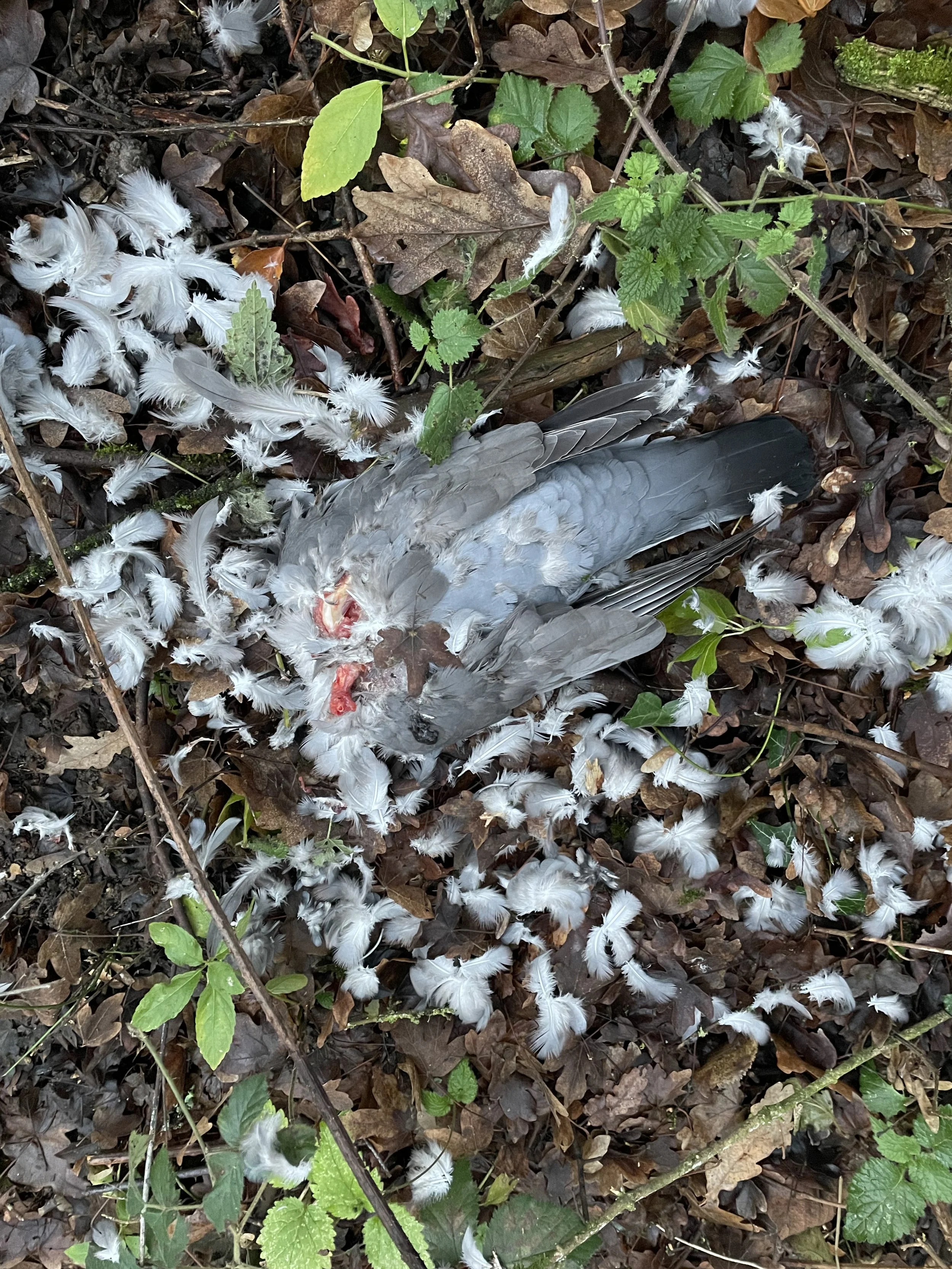
Too much of 2025 was taken up with things unrelated to the natural world and rewilding. Reflecting on this time the toxicity of those experiences was compensated by the wonders that Underhill Wood Nature Reserve (UWNR) consistently offers – like the multiple kills by the goshawks who have recently moved into the woodland to the north of the land. The power and wonder of them – a true apex predator in our midst!
At UWNR much of 2025 was dominated by the long and punishing, climate change driven drought. It ran from very early spring to late summer and the consequences were profound. One consequence we could do little about, one we directly intervened in to prevent unnecessary deaths.
For 10 years the barn owls, who are knitted into the fabric of UWNR, have produced a scratchy, raspy, squawky brood of owlets. Not this year. The drought killed off the usually abundant field vole population and in a stroke the food source was gone. My hunch – the female didn’t get into condition to breed. Moreover, I am almost certain that both resident adult birds starved to death. It was heartbreaking and I could do nothing to help. This pattern repeated itself across southern England over the course of early spring and summer! (I understand that barn owls will be re-listed from green to amber - in terms of their conservation status…).
Pretty much the same thing happened to the badger population in southern England. Badgers mostly eat worms and they sought the depths of their world, as the top layers of soil dried and baked. The resourceful badgers at UWNR adjusted their diet and plundered countless wasp and bumblebee underground nests. My hunch though was that this wasn’t going to provide sufficient sustenance for them to survive – an adult badger can weigh to 12 kilos…a big body to feed! Come very early spring, I was in contact with the ecologist who manages the badger vaccination program here – his advice: if you wish to save them, feed them. I have never completely fed anything here in the 12 years we have run this project (mimicking natural processes, I periodically put carcasses out). But the situation seemed so dire, that I was compelled to. Over the course of the spring and summer I fed the badgers a mix of peanuts, overgrown marrows and windfall apples – they heartily accepted these offerings!
Then in April, we got this on the trail camera (please ignore the date stamp in the video) – mother and young. I cannot express how elated I was. The strategy to feed them had worked.
Up until the autumn I continued with this regime. Come early winter 2025 I can report that we have lots of footage of the juveniles buggering about!
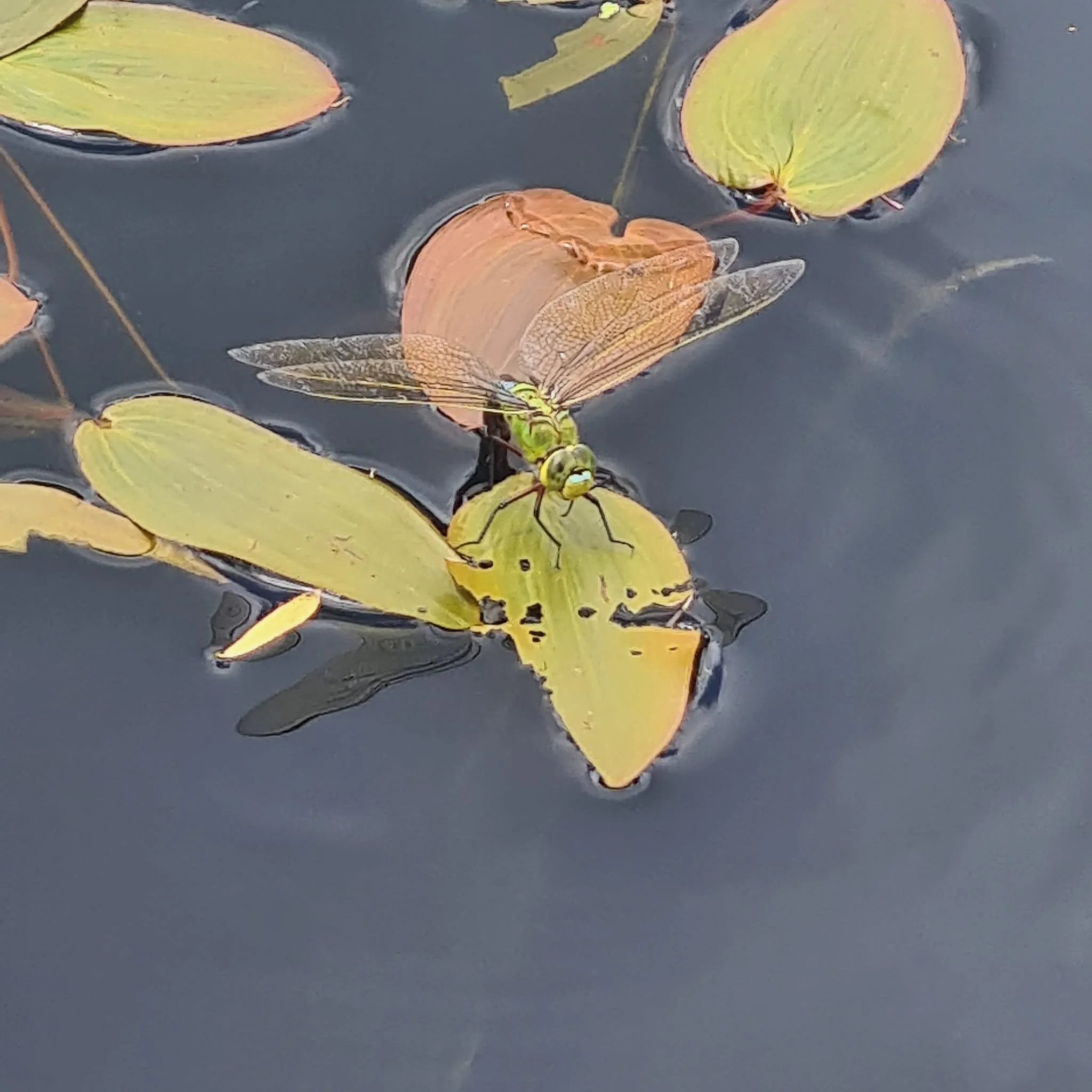
The drought did produce winners though: a burgeoning dragonfly population; crickets and grasshoppers galore, more glow worms than I have ever seen here (they are a feature of the grassland each summer) and a full cast of butterflies! In sum – invertebrates thrived in the sunny dry conditions. Given this we could assume that the bats did well…
I need to mention the otter. His spring visits have become a regular occurrence over the past 3 years. He arrives in time for peak tadpoles and fledgling waterbirds. Last year all the young moorhens (bar one) were taken in a single night. It’s interesting the waterscape of fear he has created – the mallards have never returned in numbers to the lake, after they were heavily predated. Although witnessing predation can be tough, I welcome it – the presence of predators indicates habitat health.
As we roll into 2026, I have never seen our land so sodden, after almost 40 days of consistent rain. And this on the back of the drought of 2025. I am sure of one thing - these climate change driven weather ‘events’ are having a truly devastating impact on our flora and fauna. I cannot imagine the destruction if we get to 2 degrees C…which is almost certain. But just maybe rewilding (at scale) of both our terrestrial and ocean biomes will lock in sufficient resilience, enabling a range of species to withstand these shocks. I hope so. I look forward to this coming spring / summer with a sense of deep trepidation – another drought would be dire.
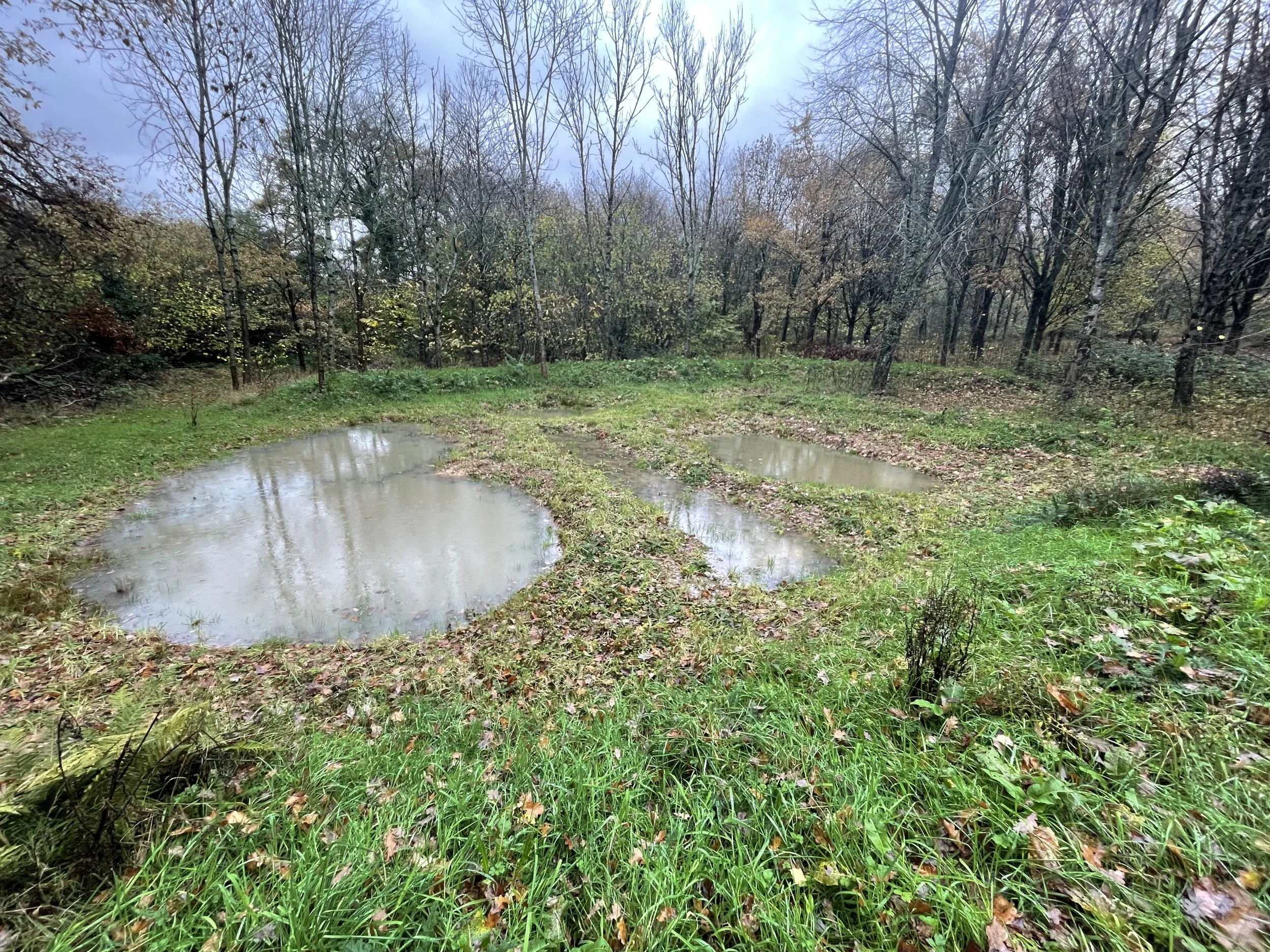
In 2024 we dug a woodland wetland - this holds valuable water on the land and helps to mitigate the impacts of extreme weather.
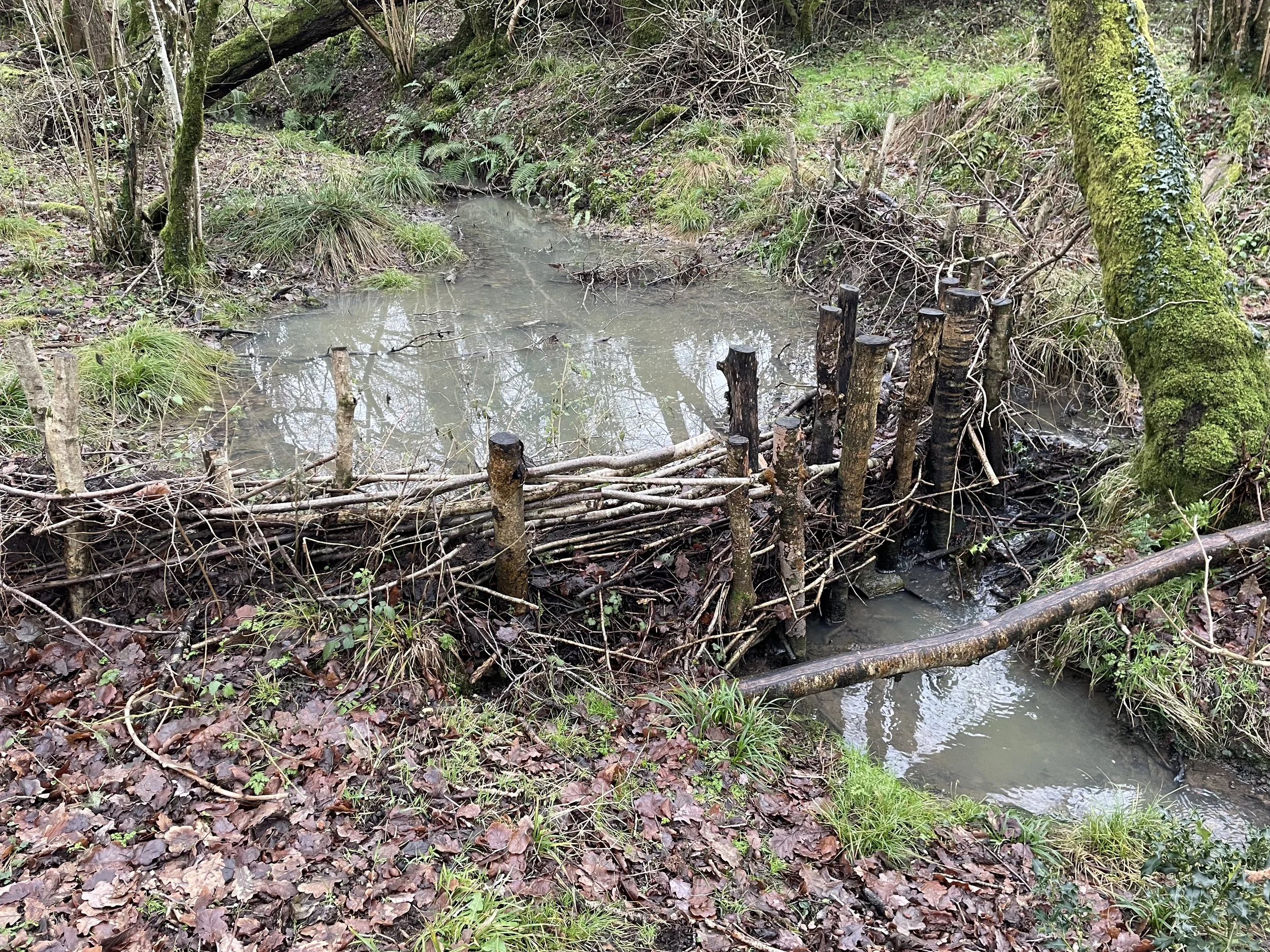
The beaver dam analogues slow spate flow through the stream system…fresh water invertebrates cannot tolerate destructive spate flows.